Bridge to Studio 2024: Learning from Dr. Joy Buolamwini

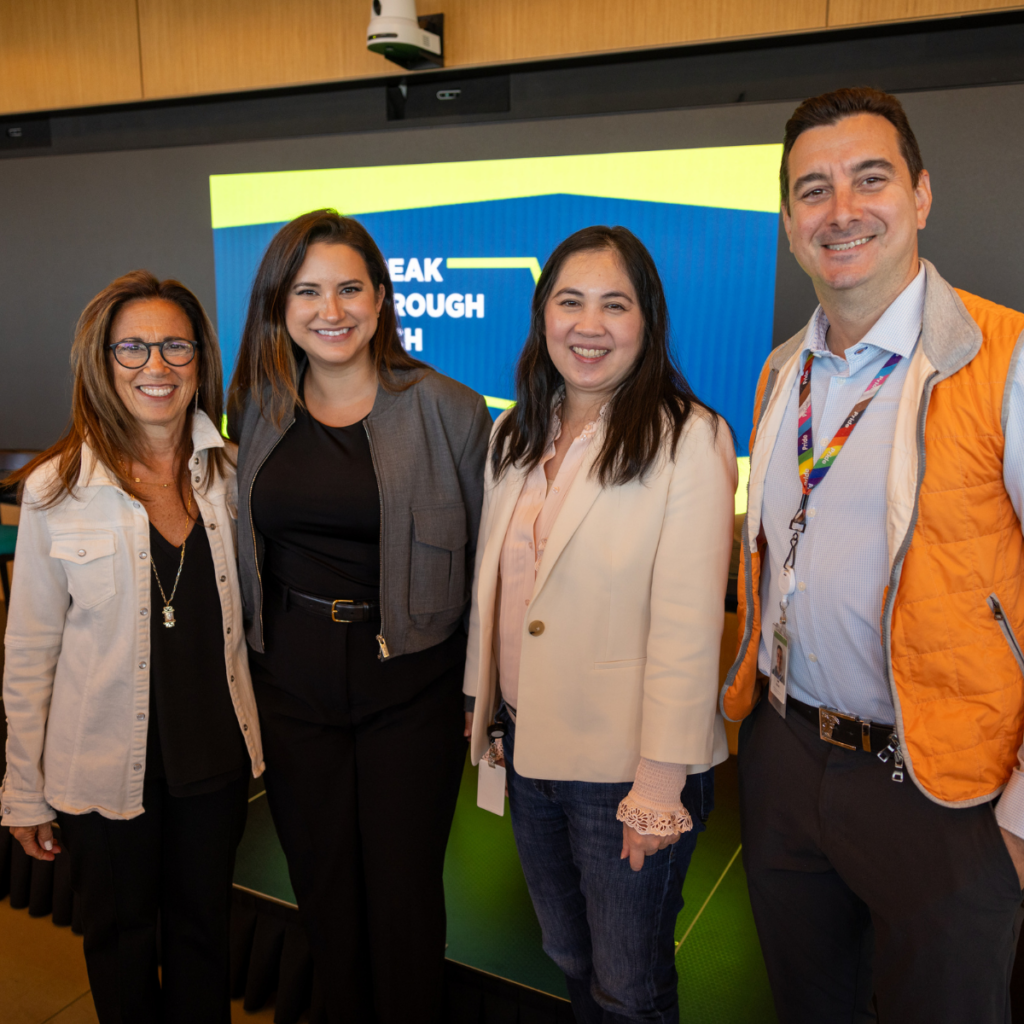
Dr. Joy Buolamwini, founder of the Algorithmic Justice League (AJL), joined our founder and CEO, Dr. Judith Spitz, for a fireside chat during our annual Bridge to Studio event. The completion of Bridge to Studio marks the next step for nearly 1,000 Break Through Tech students nationwide who have earned their Machine Learning Foundations certificate from eCornell. Students met their cohort, received guidance on preparing their resumes for AI Studio, and heard from industry experts.
Dr. Joy shared the story of her journey to tech, the importance of acknowledging the artistry in computing, and her mission to raise public awareness about the impacts of AI and galvanize researchers, policymakers, and industry practitioners to prevent AI harms. Break Through Tech students got an exclusive first look at Dr. Joy’s original white mask. The iconic mask graces the cover of Dr. Joy’s book, Unmasking AI: My Mission to Protect What is Human in a World of Machines, and has been traveling as part of an art exhibition for the past five years. Dr. Joy took us behind the mask, even giving us a peek at the hidden message in the mask that lets her know it’s the original.
“We know humans are biased—the hope was we’d use machines and be more objective and neutral—but our human fingerprints are all over that development process. We make subjective choices about even what kinds of AI applications we are going to pursue in the first place. Machines do reflect our values, they reflect our aspirations, and they also reflect our limitations. Some of those limitations come out with societal biases being embedded in AI systems.”
Dr. Joy Buolamwini founded the Algorithmic Justice League to create a world with more equitable and accountable technology. Her MIT thesis methodology uncovered large racial and gender biases in AI services from major companies. She builds on this work in her book Unmasking AI: My Mission to Protect What is Human in a World of Machines. She is one of the most influential voices in the crucial conversation on the social implications of artificial intelligence. Her TED Talk, “How We Train Algorithms to Be Biased,” and her spoken poem “AI: Ain’t I A Woman,” embody her work’s interdisciplinary nature, acknowledging tech cannot exist without art.
Related Posts
 Announcements
Break Through Tech Partners in Statewide AI Ready NJ Initiative
Posted on July 8, 2026
Break Through Tech is proud to partner with the New Jersey Council of County Colleges (NJCCC) and the NJ AI…
-
Announcements
Defining AI-Era Workforce Innovation: July 2026 Founder’s Letter
Posted on July 1, 2026
Read Dr. Judith Spitz's recent founder’s letter to learn about how Break Through Tech is building the workforce infrastructure for
 Announcements
Break Through Tech Connect: Where Fellows Meet Industry Leaders
Posted on December 5, 2024
Break Through Tech Fellows from across the tri-state area joined us at Accenture’s One Manhattan West office in New York